
Despite a Soft Finish, Brad Proved Game and Class Transcend YouTube

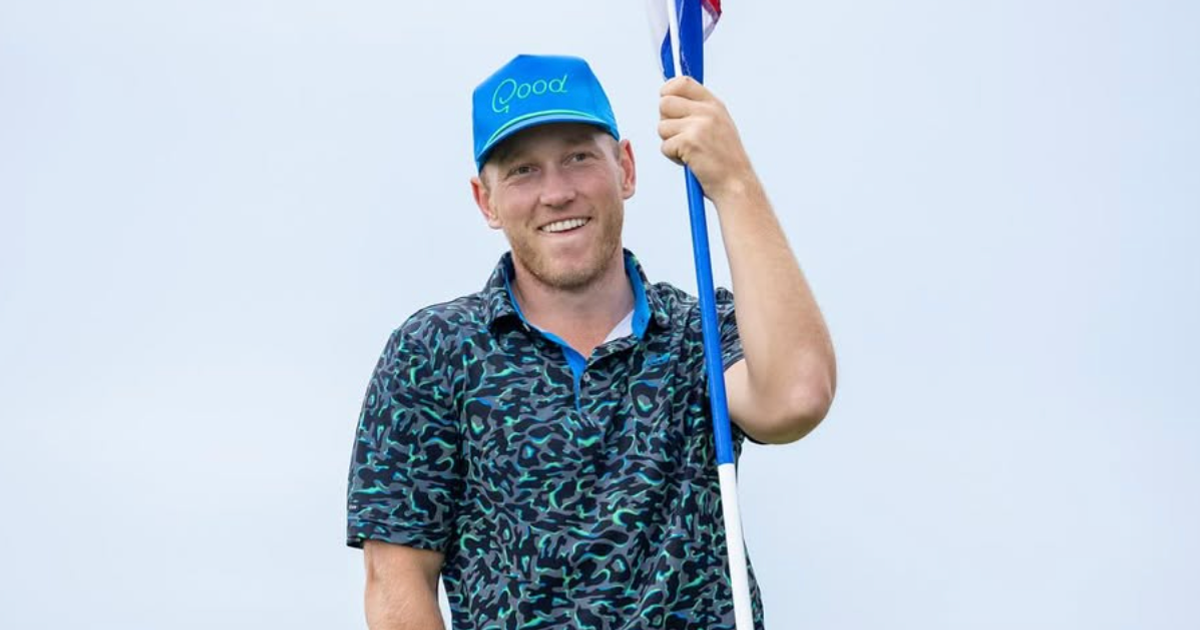
Brad Dalke has been everywhere lately. Really, ever since he won at the 2025 Internet Invitational, it's been hard to avoid his name on any internet platform for something or another. Less than 2 weeks ago he had a major life change in leaving Good Good, and of outside of knowing he would compete here, it seemed like his future was pretty uncertain. Now, this tournament didn't clear up his future to be totally transparent, but to come out and have -3 and -6 starts to his first professionally ranked tournament in 6 years while battling personal challenges was absolutely mesmerizing, and a huge win for Brad himself, the internet arena, and professional golf as a whole.
Brad's Play and What It Means For Him
To get the obvious out of the way: Brad could not keep his impressive play up, finishing middle-of-the-pack T-30 at -5. Let's be real, the idea of him stepping onto the course and coming out with a -19 under win would've been a joy to watch, but that's a Cinderella story that should have remained a hope and not the expectation. Brad made the cut, he chased the lead for 2 rounds, and put up a good score, just not a winning score. The only argument of real merit for Brad needing a better finish is that the DP World Tour and BMW International Open aren't home to the most competitive fields in golf by any stretch, but even then, it's not like Brad is claiming he can go compete there. Much of the criticism on forums and social media is simply coming from a place of disdain for content creators, out-of-context or misconstrued statements, or speculation for Brad's future. While everyone is entitled to say whatever they'd like, if you've watched anything from or including Brad, he's the strongest, most amicable liaison and transitional piece between golf content and the professional ecosystem
See, Brad comes out way ahead from this event because for years now, he's been deemed a YouTube golfer who is way too good for YouTube golf. It doesn't matter if you agree or like him, that's the tag he wears in the eyes of many. Brad has a history of professional play, an NCAA Championship, and creator tournament performances and wins under his belt. Unfortunately, Brad couldn't continue the grind of Q-School early into his career, but has always postured himself in such a neutral way that he left these doors open for himself, and getting this exemption is the kickstart he needed. Not only did he prove that taking an alternative path back to professional golf doesn't disqualify his talent or discredit his hard work, it also brings the opportunity for Brad to carry the interests of internet golf into the pro scene. Similar to Bryson DeChambeau, Brad's actions and performance in both arenas is going to naturally serve as a reflection on each as well. And, as of this event, his performance and class are a huge positive for both (unlike Bryson).
Why This Works for Professional Golf as a Whole
With the LIV Golf controversy, the explosion of YouTube Golf and golf participation en-masse, a weirdly protective and panicked culture has formed around "professional" golf, coming from both some of the entities themselves and their fans. To be fair to the tours, the professional golf super-fandom has certainly been a louder, more negative voice than the tours and players themselves. Everyone has heard the criticisms that content creation is content creation, not golf, and YouTube golfers can't possibly be as good as pros, and that the only path to professional golf should only be through grinding Q-Schools and amateur status. I say phooey. Professional Golf has always been exclusionary and a bit pompous, but the sudden uptick in screaming "we're the best and you can't compare" feels more defensive than credible. Okay, I swear there is a huge upside for professional golf, I just had to paint a real picture of what's going on right now so you can see how Brad's win gives them a great opportunity.
The BMW International Open's choice to invite Brad was really, really smart. They had very little to lose. Brad has been trending for quite some time and lots of folks wanted to see him play in an event, so they certainly would draw in a different, new audience in any case. Had he missed the cut, they stand a good chance to say prove that they have a competitive, legit field of elite golfers not cut for everyone. But what happened was better, because they not only gained Brad's audience, they proved that colliding the two worlds that most have wanted to keep separate can work out for everyone involved. Brad didn't stomp out the field and embarrass the DP World Tour competition, he didn't get obliterated by the pros, and he didn't make a fool of himself on or off the course. If other sponsors and organizations are smart, they'll look for more opportunities like this to begin merging the audiences.
How Does This Benefit Internet Golf?
Well, this is a double-edged sword. The success of Brad certainly is a positive, but there's an argument to be made otherwise. After Brad's departure from Good Good, there is a real fear that YouTube was more of a stepping stone or bridge for him to return to professional golf rather than continuing to support both worlds. Brad, of course, has been vocal about his appreciation for what content as done for him and even his actual game, but clearly he aspires to be recognized at the professional level, but does that mean that's the only thing he's chasing? Only Brad can know. But, the impact will live on through other creators, without doubt.
It's clear as day that golf is changing, and Brad has likely just become the first of many. Look, I don't want to over-hype the significance of one tournament, but this could have gone really poorly. The fact that Brad could even finish middle-of-the-pack is at least enough for further intrigue and experimentation. Who's next? Surely more Brad, but what if they concede to some media rights to give Grant Horvat a real chance, or maybe give another shot to Sam Heung Min, or how about Fat Pereze? The reason Brad's participation is so unique is because it's not at all like Bryson DeChambeau or Wesley Bryan; these guys are and were in this case long-time pros who have had success and added content to their resume. Brad, bluntly, failed at the professional level and grinded his way back, largely through and because he was to do content to support himself and better his game. This opens an entirely new path for really talented golfers who cannot afford or bear to continue through Q-School, which is known to be getting more and more grueling over time.
Closing Thoughts
Whether you're a traditionalist or not, watching good golf is what we all want. Brad Dalke gave us that, even though he came from a different background than most of our usuals. It really shouldn't be understated how much harder it is has gotten for even amazing golfers to qualify for professional events over time, and another avenue being exposed and entertained is a net benefit to the game. Feel free to be angry about it from your couch, but I'm certain, Brad is the first of many fantastic golfers to enter the professional space with a non-traditional path.